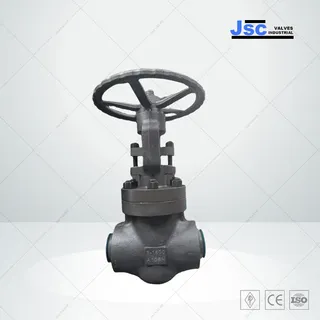
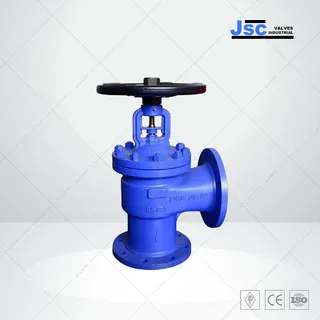
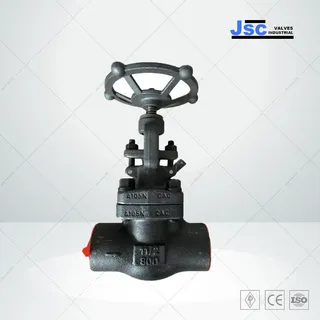
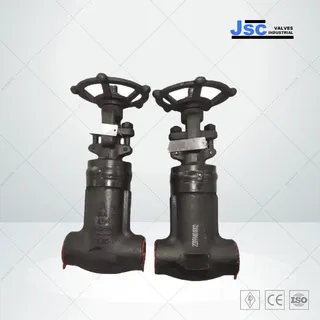
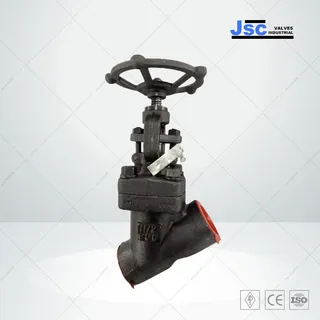
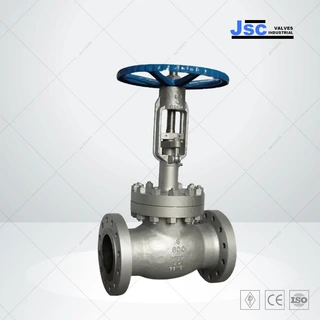
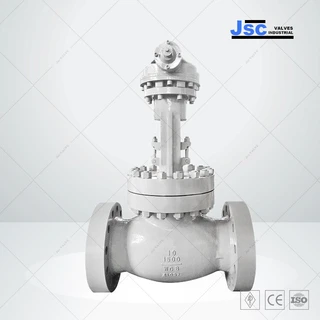
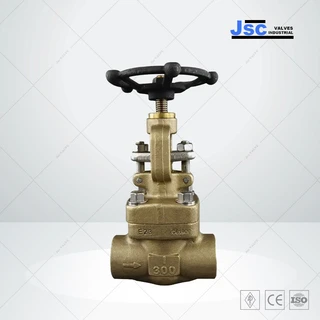
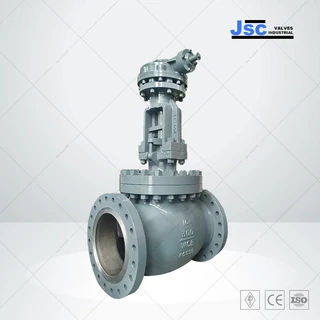
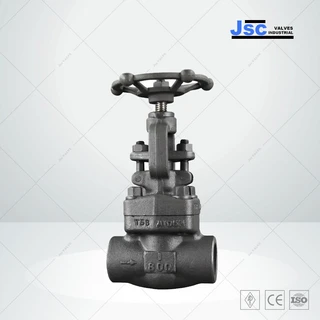
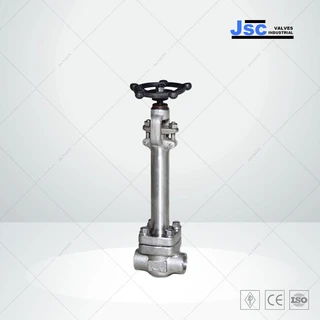
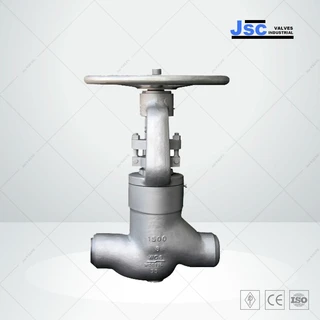
A globe valve's structure includes essential parts designed to manage fluid flow in pipelines. Here's a breakdown of the construction and components:
Body: The primary outer casing holding internal parts. Globe valve bodies vary in shapes like straight, angle, or oblique patterns.
Bonnet: The upper valve part safeguarding moving components. It's usually connected to the body through threads, bolts, or welding.
Disk (Plug): The movable part regulating fluid flow. It can be flat or convex in shape, depending on the design.
Seat: A fixed, ring-shaped surface where the disk seals to control flow. The seat is either part of the body or replaceable.
Stem: It connects the handwheel or actuator to the disk, transmitting motion to open or close the valve.
Globe valves come in various types, each tailored to specific operational needs and industry requirements. The main types are:
Angle Globe Valve: In this valve, the flow path is at a 90-degree angle to the valve seat. It's ideal for applications with space limitations or directional changes in the piping system.
Straight Globe Valve: The most common type, featuring a linear flow path. Straight globe valves work well in applications with high-pressure drops.
Y-Pattern Globe Valve: This valve has a Y-shaped body, creating a streamlined flow path. Y-pattern globe valves are often chosen for applications where minimizing pressure drop is crucial.
Stop Check Globe Valve: Combining features of a globe valve and a check valve, this type allows for flow regulation and prevents backflow.
Bellows Globe Valve: Bellows globe valves feature a bellows seal to prevent leakage, making them suitable for applications involving hazardous or corrosive fluids.
Globe valves present several advantages across diverse industrial applications, making them the preferred choice for specific scenarios. Here are key benefits of globe valves:
1. Precise Flow Control Their linear motion design allows globe valves to offer precise control over fluid flow, making them ideal for applications requiring accurate regulation of flow rates.
2. Reliable Shut-Off The design ensures a tight seal between the disk and the seat, ensuring dependable shut-off when the valve is closed. This feature is critical for preventing leakage.
3. Ease of Maintenance With a straightforward design and fewer moving parts compared to some valve types, globe valves facilitate easier maintenance and repair, minimizing downtime.
4. Good for Throttling The linear motion of the disk makes globe valves well-suited for throttling applications, allowing precise control over the extent to which the valve is open to manage the flow.
5. Reduced Water Hammer Gradual opening and closing of the disk help mitigate the impact of water hammer, a phenomenon that can occur when rapidly closing or opening a valve.
6. Bi-Directional Sealing Globe valves typically provide effective sealing in both flow directions, enhancing their adaptability in various piping systems. This bidirectional sealing capability adds to their flexibility.
Globe valves are widely applied in diverse industries, owing to their capability for precise fluid flow control and dependable shut-off. Here are common applications of globe valves:
Water Treatment Plants: Utilized to control the flow of water, chemicals, and fluids in processes such as filtration, disinfection, and distribution within water treatment facilities.
Petrochemical Industry: Crucial for regulating the flow of various fluids, including oil, gas, and chemicals, in refining and processing operations within the petrochemical sector.
Oil and Gas Industry: Used in pipelines, refineries, and distribution systems to control the flow of crude oil, natural gas, and refined products within the oil and gas sector.
Steam Systems: Commonly used in steam distribution systems for regulating the flow of steam in various industrial processes, including heating and power generation.
Marine Applications: Applied in shipboard systems to control the flow of seawater, ballast, and other critical fluids relevant to maritime operations.
Boiler Feedwater Control: Integral in boiler systems for regulating the flow of feedwater, ensuring optimal conditions for steam generation.
Globe valves are essential components in fluid control systems, offering precise flow control and reliable shutoff capabilities in a variety of industrial applications.